Circular economy in Schkopau – from waste to product
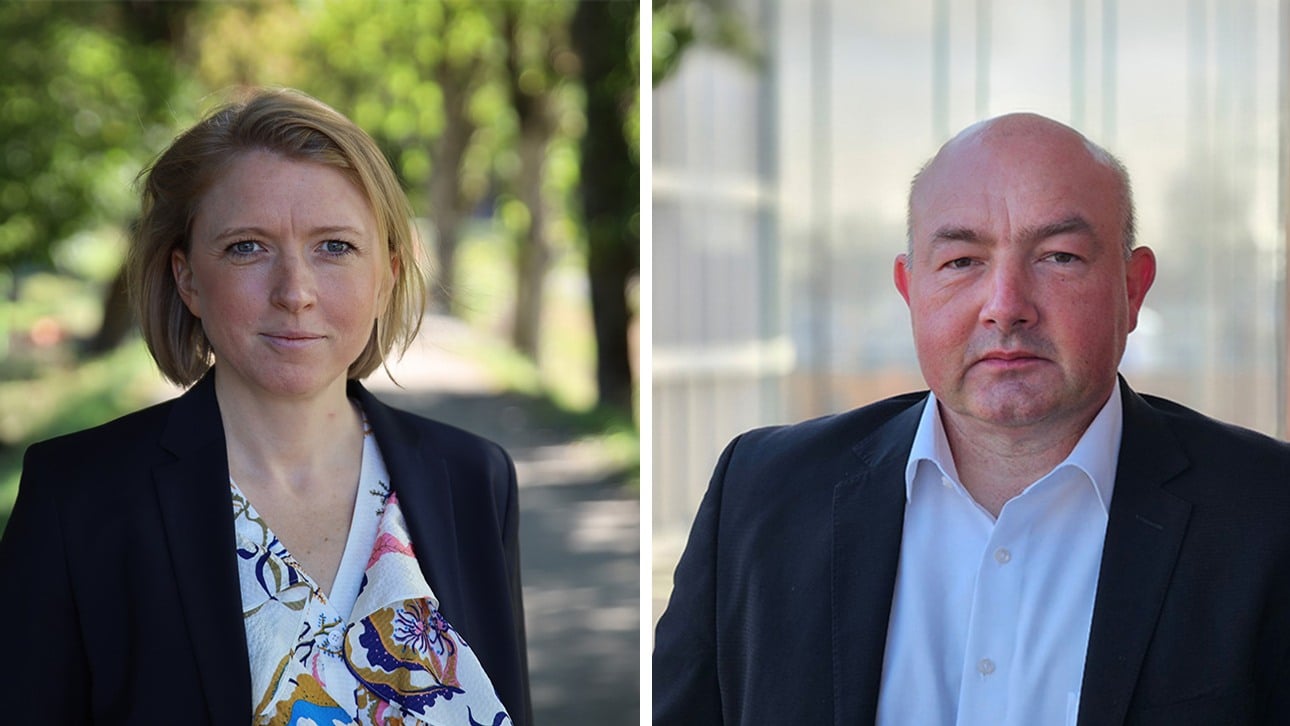
Managing directors Anna Lundbom and Thomas Block share their insights on the Ash2Phos project in Schkopau and its role in advancing sustainable resource recovery.
20 Mar 2026Phosphorgewinnung Schkopau GmbH is building a plant in Schkopau, Saxony-Anhalt, to recover phosphorus from sewage sludge ash produced during the incineration of municipal sewage sludge. The plant uses the Ash2Phos process, which extracts more than 90% of the phosphorus contained in the ash and processes it into high-quality calcium phosphate.
The plant is being built at the Schkopau Chemical Park as the world's first large-scale recovery plant of its kind and is scheduled to go into operation in 2027.
PGS is a joint venture between EasyMining and GELSENWASSER. In this interview, the two managing directors, Anna Lundbom and Thomas Block, talk about their work in Schkopau and how they are helping to shape the future of the circular economy.
Every major project begins in a place that offers something essential. What makes Schkopau the right starting point for Ash2Phos technology? What are the particular advantages of the location?
Anna Lundbom: Schkopau is a historically established chemical site. This naturally gives us a good starting position in terms of raw materials, employees, knowledge base and partners. We receive maximum support from the licensing authorities and ministries in Saxony-Anhalt, as well as from the surrounding municipalities. So there are many factors that were decisive in choosing this location. We are dependent on such conditions, as we need large quantities of chemicals and raw materials, which we already find here.
Construction of the Ash2Phos plant began in 2025, with commissioning planned for 2027.
How is the collaboration with the construction team organised and how does the daily coordination with the employees on site work? How would you describe the atmosphere?
Thomas Block: It is important for such a large-scale project to have a local partner like EDL Anlagenbau Gesellschaft mbH. The project is running according to plan, even if there are minor problems, as with all such projects: in complex projects, the partners have to come together, and that is what has happened here. We are on the right track together. The challenges are being solved jointly. We are aiming to start production in mid-2027.
Anna Lundbom: We are now entering a very exciting phase in which the future operational organisation is being set up and the first employees are already on board. It is fantastic to see the commitment of these people. Everyone is convinced that they are making a contribution to the future, perhaps not for the entire planet, but at least for Germany and the municipal wastewater industry. This conviction is overwhelming and naturally also contributes to a good working atmosphere.
EDL is the EPCm (engineering, procurement and construction management) contractor for the construction project, and when the plant is completed in 2027, it will have a capacity of 30,000 tonnes of sewage sludge ash per year. It will thus contribute to closing the phosphorus cycle and reducing import dependencies for this critical raw material – an important step towards sustainable raw material security and a circular economy.
More staff will be needed before the plant is completed. When will you be advertising further positions?
Anna Lundbom: We plan to start hiring more staff at the end of 2026 so that the team is complete in time for commissioning and all processes and procedures can be established and trained.
Dow, the operator of the Schkopau Chemical Park, has announced plans to reduce production at the site. Will this have an impact on production at the Ash2Phos plant?
Thomas Block: Developments in the region naturally affect us, but they do not jeopardise our project. The Ash2Phos process for recovering phosphorus from sewage sludge ash requires hydrochloric acid and caustic soda, among other things, which have been produced in Schkopau to date. If hydrochloric acid and caustic soda are no longer available locally in the future, PGS will purchase them on the market and transport them to Schkopau in the quantities required. This will ensure the production of the Ash2Phos plant.
Hydrochloric acid is used in the process to extract the valuable phosphorus from the sewage sludge ash, while caustic soda is used in further production operations to produce calcium phosphate from the dissolved phosphorus, which is to be marketed under the name RevoCaP.
RevoCaP is one of the Ash2Phos products and is already approved for use in organic farming. Are you also keeping an eye on sales development and a distribution network?
Anna Lundbom: The phosphorus and fertiliser market tends to be national or European in scope. Phosphorus is an irreplaceable, critical raw material that is currently imported exclusively from countries such as Russia. For Saxony-Anhalt, it is a great opportunity to be one of the first producers of a recycled, very pure fertiliser that can be used for both organic and conventional farming and possibly also as animal feed. The fact that it is approved for organic farming demonstrates the high value of the product.
Does the Ash2Phos plant manufacture any other products?
Anna Lundbom: We not only recycle phosphorus, but also other important materials such as iron, aluminium and sand. All these materials are needed by society and offer us new market opportunities.
Iron and aluminium are returned to the chemical industry as ferric chloride and sodium aluminate, or used in wastewater treatment, while the sand recovered can be used in the construction industry – so you could say that the sewage sludge ash is almost completely recycled.
Are there any waste materials in the Ash2Phos process?
Thomas Block: Our process removes heavy metals from the ash, which is initially sent to landfill. However, there are already development projects and interested parties who see value in this heavy metal concentrate. We also treat the wastewater ourselves, which makes a sustainable contribution to the environment.
How did the cooperation between EasyMining and Gelsenwasser come about? What was the initial spark for this partnership as a European company?
Thomas Block: Both companies are committed to the circular economy, and the actual cooperation arose from the individual backgrounds of the two partners: EasyMining had the technology and Gelsenwasser is a strong player in the German utility market. The partnership complements each other's knowledge of ash, wastewater and technology. Germany is a pioneer in the implementation of recycling requirements for critical raw materials, which is particularly important in view of geopolitical developments.
From Schkopau to the global market: How do you see the cooperation developing in the future? What are the next steps?
Anna Lundbom: The focus is initially on the German market, but there is also interest from abroad. The aim is to first operate a successful plant in Schkopau and then transfer the knowledge to other locations.
Are there already plans to build further Ash2Phos plants?
Anna Lundbom: The most important goal at the moment is to bring the first Ash2Phos plant in Schkopau into successful regular operation. Then we will transfer the knowledge we have gained here to other plants, e.g. for the planned plant in Helsingborg, Sweden, or in south-west Germany. We are open to further cooperation projects in Germany, which is our primary focus market at the moment.
What distinguishes your approach from that of your competitors?
Thomas Block: We welcome competition, because we will never be able to process all the ash in Germany. We only want to talk about the differences between us and other providers once we have produced the product in the defined quality and placed it on the market.
How would you describe PGS as an employer?
Anna Lundbom: PGS is an innovative company committed to the circular economy and recycling. Safety is our top priority. We are looking for people who see it as a challenge to help shape structures and be part of a future-oriented corporate culture.
Thomas Block: We are proud to contribute to resource security and strengthen the local economy. Let's start here together to make the future more sustainable!
German translation of the article