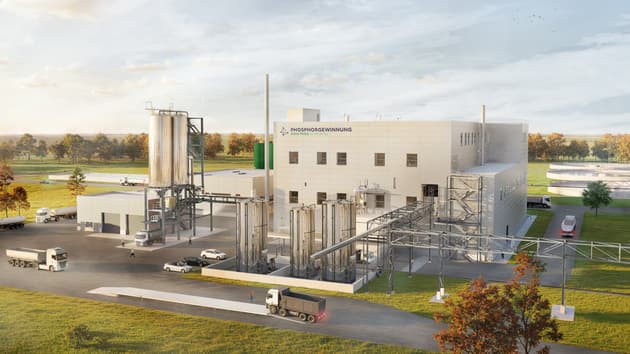
From wastewater to agriculture – closing the phosphorus loop
Phosphorus recovery may seem like a niche topic within the circular economy, but its importance to our daily lives and the global economy may surprise you. This article takes you on a journey through the story of phosphorus recovery and explores Ash2Phos, a technology developed by EasyMining.
26 Aug 2026Phosphorus is an essential nutrient for agriculture and global food production, yet Europe remains heavily dependent on imported phosphate rock from a limited number of countries. This dependence creates supply risks, price volatility, and environmental impacts associated with mining and transportation. At the same time, large amounts of phosphorus are lost every year in sewage sludge generated during wastewater treatment.
EasyMining's patented Ash2Phos technology addresses this challenge by recovering high-quality phosphorus from the ash produced after sewage sludge incineration. Instead of treating sewage sludge ash as waste, Ash2Phos use the ash as a raw material and converts it into valuable products for agriculture and industry, supporting a circular economy where critical nutrients are continuously recycled.
The role of wastewater treatment
Wastewater treatment plants remove phosphorus from wastewater to protect rivers and lakes from eutrophication. However, most of this phosphorus becomes concentrated in sewage sludge rather than being recovered for reuse.
Phosphorus Recovery methods that operate in the sludge phase often capture only a portion of the available phosphorus or produce materials that are unfamiliar to the fertilizer market. As a result, the recovered materials may have limited commercial value and low acceptance among farmers.
Ash2Phos overcomes these limitations by extracting more than 90% of the phosphorus contained in sewage sludge ash while simultaneously recovering other valuable materials such as iron and aluminium. The process produces commercially recognised products that integrate directly into existing agricultural and industrial supply chains.
Incineration as the first step
Before phosphorus recovery can occur, sewage sludge needs to be incinerated. Although some countries in the EU such as Germany, Netherlands and Austria incinerate most of their sludge, others still use it for agricultural purposes. Incineration reduces the sludge volume by approximately 90%, significantly lowering disposal requirements while concentrating valuable minerals within the remaining ash.
Although the ash contains high concentrations of phosphorus, iron, and aluminium, it has traditionally been considered difficult to utilise because it may also contain heavy metals. Ash2Phos transforms this challenge into an opportunity by extracting valuable resources from contaminants.
Producing high-quality fertiliser materials
A key advantage of Ash2Phos is the production of high-purity calcium phosphate, marketed as RevoCaP™.
This high-purity calcium phosphate can be used in multiple applications - as a raw material in fertiliser production, a direct-application slow-release fertiliser, and as a feed phosphate. RevoCaP is also approved for organic farming pursuant to the Regulation (EU) 2018/848.
This allows RevoCaP to replace virgin phosphate rock without requiring significant changes in farming practices.
In addition to phosphorus recovery, the process also generates commercially valuable co-products, including ferric chloride, aluminium chemicals, and sand fractions, further improving resource efficiency and reducing waste.
Benefits for agriculture
For agriculture, Ash2Phos provides several important advantages:
- Supplies recycled phosphorus in a form accepted by fertiliser and feed manufacturers.
- Reduces dependence on imported phosphate rock.
- Produces high-purity products through efficient removal of heavy metals.
By returning phosphorus recovered from wastewater back into food production, the technology helps close the nutrient cycle and promotes more sustainable farming systems.
Supporting circular resource management
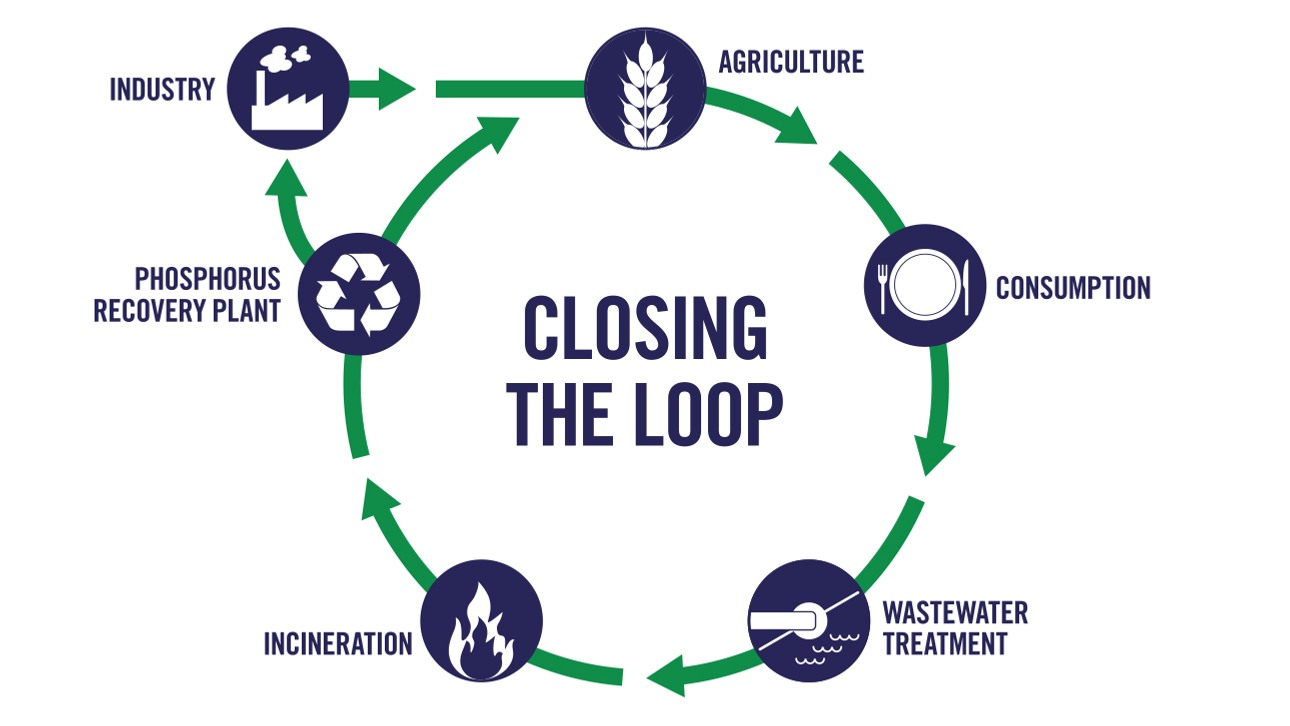
Ash2Phos creates a symbiotic relationship between wastewater treatment plants, sludge incineration facilities, and agriculture. Wastewater treatment removes nutrients from water, incineration concentrates those nutrients into ash while generating heat or electricity, and Ash2Phos converts the ash into marketable products that re-enter agricultural and chemical production.
More than 95% of the incoming ash is utilised, significantly reducing waste while recovering critical resources that would otherwise be lost.
Looking ahead
Technologies such as Ash2Phos offer a practical pathway toward circular nutrient management and recognising domestic production of a critical raw material. By transforming sewage sludge ash into clean, commercially valuable phosphorus products, the process supports wastewater treatment, reduces waste, strengthens feed and food supply chains, and contributes to a more resilient and sustainable agricultural system.