The art of collaboration: upscaling a first-of-its-kind plant
A partnership between two core EasyMining teams to scale up the Ash2Phos process into a full chemical plant will have serious significance for the future in more ways than one.
29 Oct 2026Transforming any chemical process into a full-scale plant is never easy, but upscaling new technology for an industrial facility for the first time is especially challenging.
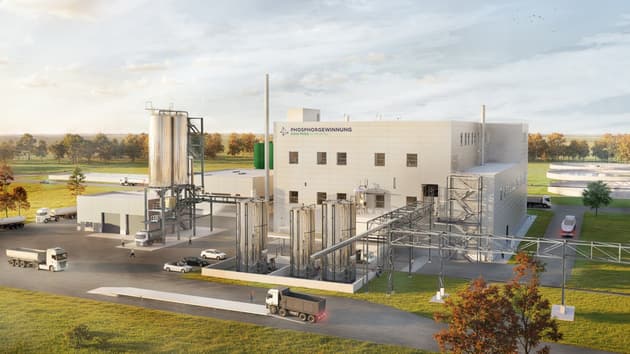
When EasyMining’s Ash2Phos plant in Schkopau, Germany starts operating in 2027, it will be the first facility of its kind in the world. A joint venture with the German utility company and wastewater treatment provider Gelsenwasser, the plant will recover phosphorus (a critical nutrient in fertilisers and livestock feed) and other resources from 30,000 tonnes of incinerated sewage sludge per year.
At EasyMining, close collaboration between the Research & Development (R&D) Team, which discovers and refines chemical processes for resource recovery, and the Engineering Team, which turns those processes into full-scale plant operations, has been key to making the Schkopau plant a reality.
This technical partnership will soon reach a crescendo of intensity for the project’s final phase, but its impact will extend far beyond the plant.
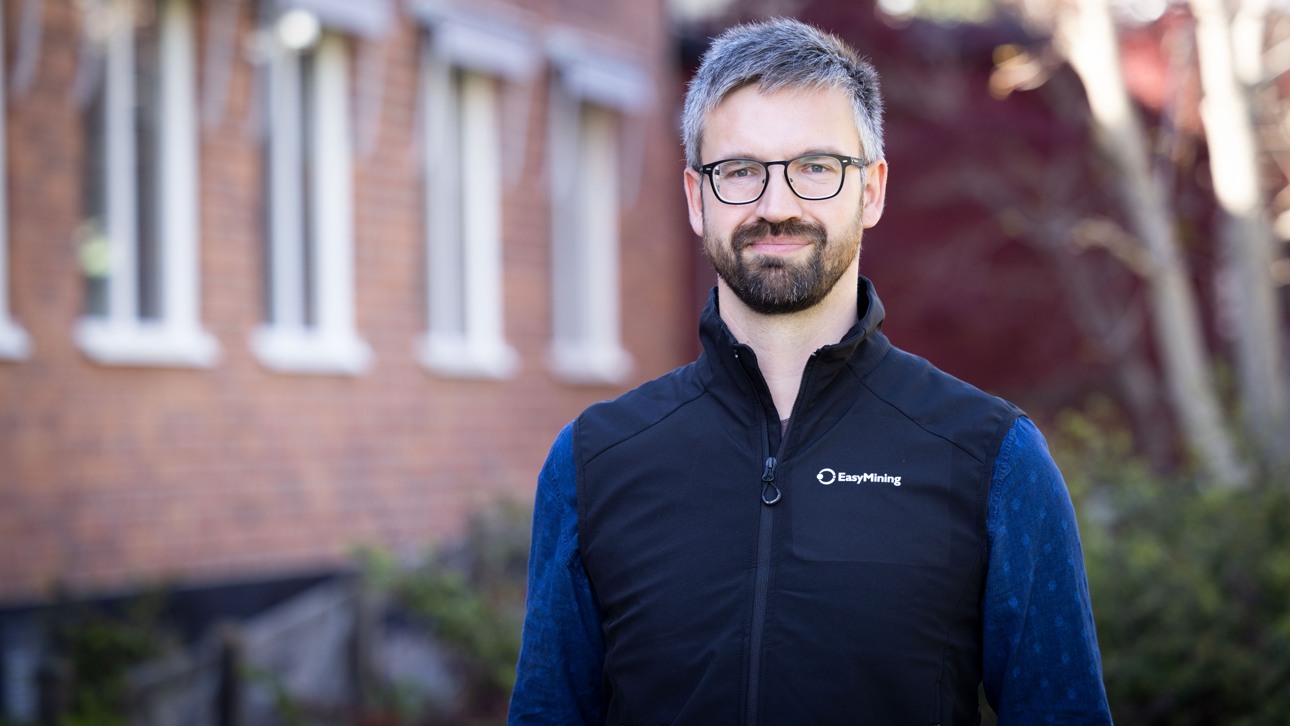 Michael Meyer, Senior R&D Engineer and R&D Lead for Ash2Phos, EasyMining, Uppsala, Sweden.
“We’re facing things that we maybe hadn't foreseen or questions that we hadn’t considered”
According to Michael Meyer, Senior R&D Engineer at EasyMining and R&D Lead for Ash2Phos, scaling up a chemical process into a working plant always requires some level of collaboration.
“It's not like R&D just hands over a set of parameters and Engineering takes it from there and that’s it. Especially when you're scaling up a process for a first-of-its-kind plant rather than one that has already been built dozens of times around the world, he says.
And the difference in the teams’ roles often comes with clashing perspectives.
“I think R&D are really open-minded and good at seeing all the possibilities, and I think at Engineering we see more difficulties,” says Hanna Landbring, EasyMining’s Engineering Manager and Lead Process Engineer for the Ash2Phos project.
Yet developing and building the Schkopau plant has demanded both mindsets.
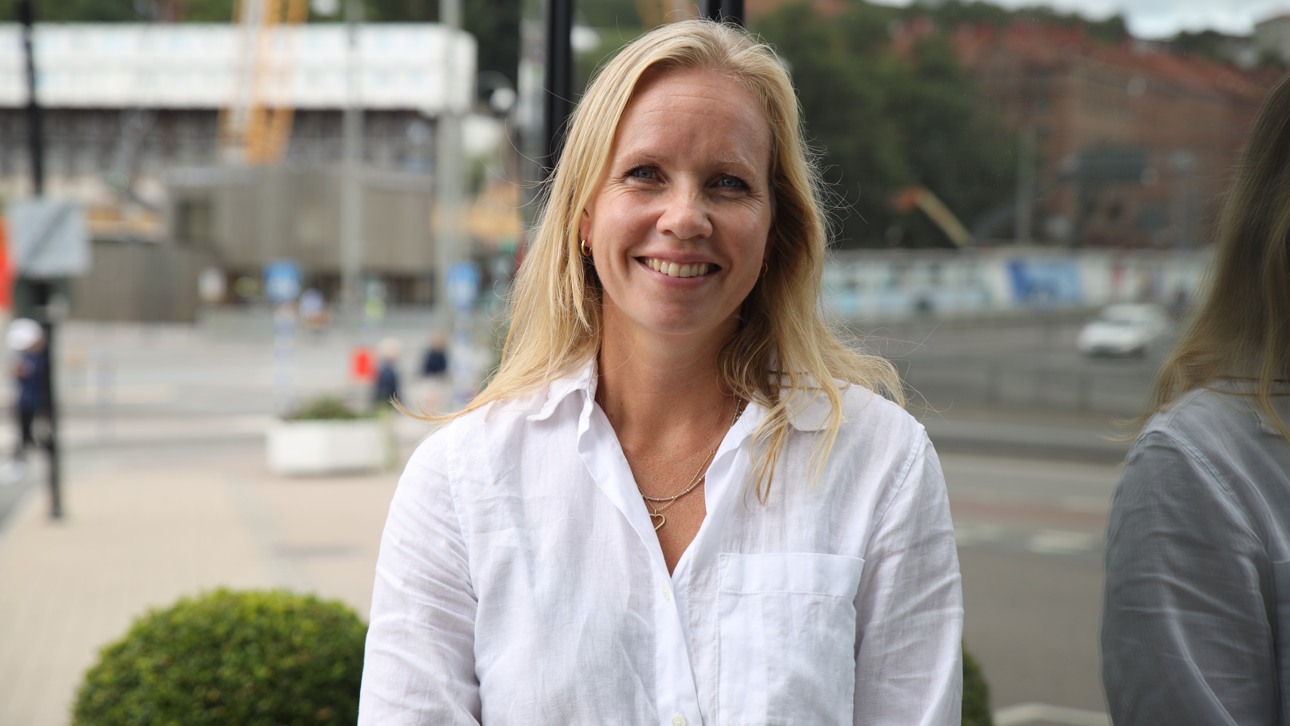
Hanna Landbring, Engineering Manager and Lead Process Engineer for Ash2Phos, EasyMining, Gothenburg, Sweden.
Setting up an iterative process
The collaboration in our teams traces back to several joint pilot projects in the late 2010s and early 2020s related to Ash2Phos, which validated the feasibility of reproducing the technology on a larger scale and the equipment to do so.
Through those initial efforts, the teams found ways to work across their contrasting approaches but also geographic distance. Since EasyMining’s earliest days, the R&D Team has been based in Uppsala, about an hour’s drive north of Stockholm, and the Engineering Team is in Gothenburg on Sweden’s west coast, about 500 kilometres clear across the country.
Alongside the digital solutions most organisations use today, the teams established regular, structured communication, such as a weekly virtual meeting where R&D presents laboratory findings and Engineering shares project updates.
But there’s also been an emphasis on meeting face-to-face.
This framework for collaboration proved to be essential during Ash2Phos’s large-scale piloting phase, an intense period of work to determine the fundamental parameters and conditions for future upscaling. Soon afterwards, planning for the Ash2Phos plant in Schkopau was in full swing. The R&D and Engineering Teams then had to work together through overlapping stages – from equipment testing steps and process diagramming to 3D modelling and plant design – leading up to the start of construction in May 2025.
As a result, the teams have cultivated an iterative process for collaborating on specific upscaling issues.
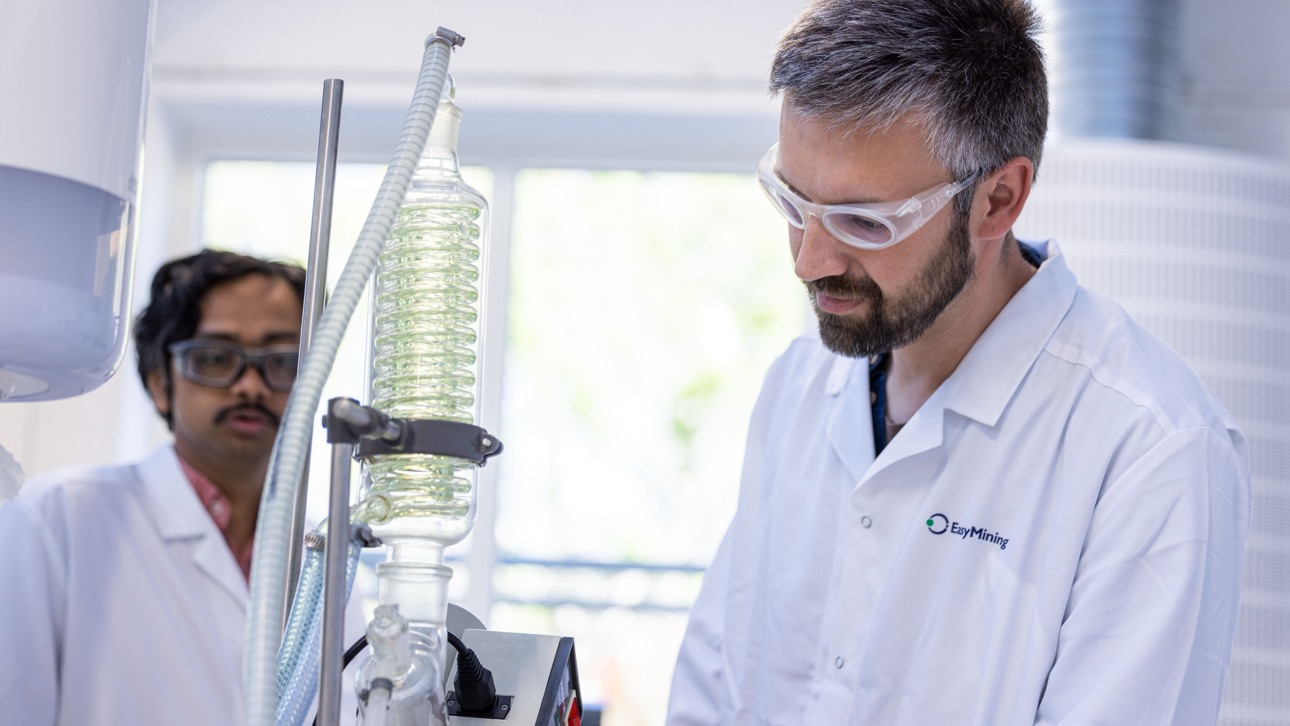
Michael Meyer and his team test and refine process solutions in EasyMining’s laboratory in Uppsala.
Invaluable insights along the way
Because operational challenges in upscaling can reveal issues undetectable in the lab and pilot stages, EasyMining’s R&D and Engineering Teams have made several improvements to the Ash2Phos process while developing its first full-scale plant.
For example, a specific reagent was originally used in the chemical precipitation step to isolate and remove heavy metals, which was fine in smaller-scale iterations but turned out to be a potential hazard in a plant.
In addition, industrial processes often have to be adjusted to optimise outputs for the market. Ferric chloride, for instance, isn't Ash2Phos's main product but has valuable uses in wastewater treatment, if it meets certain standards.
But the collaboration on Ash2Phos has also yielded insights for chemical processes yet to be developed.
It’s even provided an understanding for how to navigate the realities of building future plants faster and more effectively.